Server Cabinet: A Complete Guide to Choosing the Best Server Rack for Your Data Center
- Share
- publisher
- 李川川
- Issue Time
- May 22,2026
Summary
This article offers an in-depth professional guide to server cabinets, covering their core definition, standard specifications, key functions, and practical selection criteria. It elaborates on the vital benefits of premium server cabinets in equipment organization, heat dissipation, physical security, cable management, and scalable deployment, while classifying common cabinet types by size and structure.
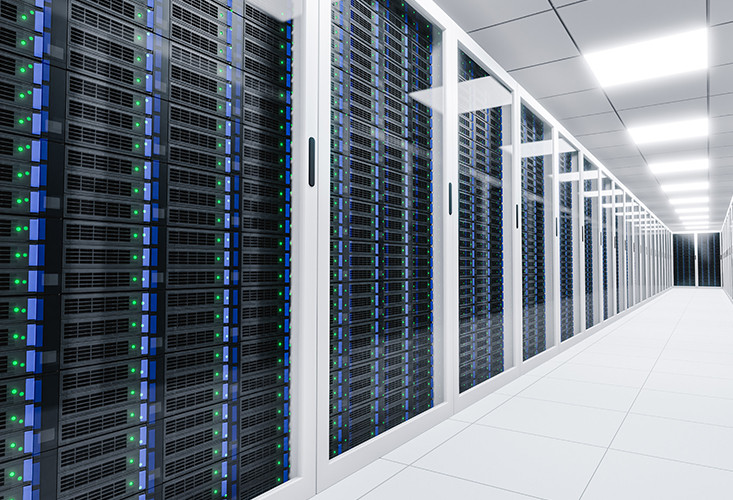
Server Cabinet: A Complete Guide to Choosing the Best Server Rack for Your Data Center
In modern data centers, enterprise offices, and IT infrastructure systems, a high-quality server cabinet is no longer an optional accessory but a core foundational device. It serves as the secure, organized, and standardized enclosure for servers, switches, routers, storage devices, and other critical IT hardware. Whether you are building a large-scale data center, upgrading enterprise network equipment, or setting up a small business server room, selecting the right server cabinet directly impacts equipment stability, operational efficiency, safety, and long-term maintenance costs.
Many IT managers overlook the importance of server rack cabinets and simply focus on hardware performance. In fact, a poorly matched cabinet will lead to poor heat dissipation, messy cable management, equipment vibration damage, dust accumulation, and even security risks, resulting in frequent device failures and increased maintenance expenses. This comprehensive guide will cover everything you need to know about server cabinets, including core functions, standard specifications, key features, common types, and practical buying tips, to help you pick the most suitable solution for your business.
What Is a Server Cabinet?
A server cabinet, also known as a server rack cabinet, is a standardized 19-inch wide metal enclosure designed to house and protect rack-mounted IT equipment. All regular server cabinets follow universal industry standards, with internal vertical mounting height measured in Rack Units (U). 1U equals 1.75 inches (44.45mm), which is the unified measurement for all rack-mount devices worldwide.
Unlike simple open racks, closed server cabinets feature complete frames, protective doors, side panels, ventilation systems, and cable management structures. They provide all-round protection for internal hardware while realizing centralized management of network and server equipment. From small 6U/12U wall-mounted cabinets for home labs and small offices to 42U/47U floor-standing cabinets for commercial data centers, server cabinets cover all scenarios of IT equipment deployment.
Core Functions & Key Benefits of a Quality Server Cabinet
Professional server cabinets are engineered to solve multiple pain points in IT equipment deployment and operation. Their core advantages are reflected in the following five aspects:
1. Standardized Equipment Organization & Space Optimization
Scattered placement of servers and network devices wastes floor space and makes daily management chaotic. Standard server cabinets adopt a unified 19-inch mounting width, compatible with almost all mainstream rack-mounted servers, switches, firewalls, and PDUs. Reasonable layered design maximizes vertical space utilization, saving more than 70% of floor space compared with scattered placement. It enables orderly arrangement of equipment and greatly simplifies daily inspection, replacement, and upgrade work for IT staff.
2. Professional Heat Dissipation & Airflow Management
Overheating is the primary cause of server downtime and hardware aging. High-quality server cabinets are equipped with scientific ventilation structures, including top fan mounting positions, perforated front and rear doors, and side heat dissipation holes. They form a stable front-in and rear-out airflow circulation system, effectively taking away heat generated by high-power operating equipment. This constant temperature and ventilation environment avoids local overheating, ensures long-term stable operation of servers, and extends the service life of IT hardware.
3. Comprehensive Physical Security & Dust Protection
Enterprise server cabinets are fitted with lockable front glass doors, rear metal doors, and detachable side panels, which effectively prevent unauthorized access, equipment collision, and accidental damage. Meanwhile, the dense and uniform perforated design can block external dust, debris, and moisture. Long-term dust accumulation will cause circuit short circuits and signal instability, and the closed protective structure of the cabinet perfectly solves this problem, reducing equipment failure rates caused by environmental factors.
4. Systematic Cable Management
Massive power cords, network cables, and fiber lines are inevitable in server room deployment. Professional server cabinets are reserved with cable holes, cable organizers, and wiring grooves, which classify and arrange various lines in order. Neat wiring not only improves the overall aesthetics of the server room but also avoids signal interference caused by tangled lines, and greatly speeds up troubleshooting and line maintenance efficiency.
5. High Stability & Scalability
Formal manufacturer server cabinets adopt thickened cold-rolled steel plates and reinforced welded frames, with strong load-bearing capacity and anti-vibration performance. They can bear the heavy weight of stacked servers without deformation or shaking. In addition, the standardized modular design supports later equipment expansion. Enterprises can add servers, storage devices, and power distribution equipment according to business growth without replacing the entire cabinet, realizing flexible and low-cost capacity expansion.
Common Standard Sizes & Types of Server Cabinets
Server cabinets are classified by height, installation method, and usage scenario, with clear standard specifications for different application needs:
1. By Height (U Height)
- Small-sized cabinets (6U/9U/12U): Compact and wall-mounted, suitable for small offices, home labs, and branch network equipment deployment, occupying no floor space and easy to install.
- Medium-sized cabinets (22U/27U/32U): Floor-standing type, with moderate load-bearing and space, ideal for small and medium enterprise server rooms, meeting daily office network and small server deployment needs.
- Large-sized cabinets (42U/47U): The mainstream standard for commercial data centers, with super load-bearing and large storage space, supporting batch deployment of high-power servers, storage arrays, and UPS equipment.
2. By Installation & Structure Type
- Floor-standing server cabinet: The most widely used type, with strong load-bearing, complete heat dissipation and protection functions, suitable for professional server rooms and data centers.
- Wall-mounted server cabinet: Lightweight and portable, space-saving, mainly used for small network equipment such as switches and patch panels in narrow spaces.
- Open frame server rack: No closed door and side panels, excellent heat dissipation, convenient for equipment inspection and heat dissipation, suitable for professional data center intensive deployment scenarios.
Key Factors to Consider When Buying a Server Cabinet
Many buyers only pay attention to price when purchasing server cabinets, resulting in mismatched models and poor use experience. To select a cost-effective and durable server cabinet, please focus on the following core parameters:
1. Load-Bearing Capacity
Servers and storage equipment are heavy hardware. Ensure the cabinet frame and layer boards have sufficient load-bearing capacity. High-quality industrial cabinets have a static load of more than 800KG, which can stably support long-term stacked equipment operation without deformation.
2. Heat Dissipation Performance
Check the perforation rate of front and rear doors, fan configuration, and airflow design. For high-power server deployment, it is recommended to choose a cabinet with high-density ventilation holes and reserved multi-fan installation positions to ensure efficient heat exchange.
3. Material & Craftsmanship
Premium server cabinets adopt high-quality cold-rolled steel plates with anti-rust, anti-corrosion, and electrostatic spray treatment on the surface. The overall frame is firmly welded, with smooth cabinet body and no burrs, ensuring long-term use without rust and deformation.
4. Compatibility & Expandability
Confirm that the internal 19-inch standard mounting width is compatible with existing equipment. At the same time, reserve enough space for PDUs, cable managers, and later equipment expansion to avoid secondary replacement costs.
5. Safety Configuration
Priority should be given to cabinets with anti-theft locks, detachable side panels, and grounding protection functions to ensure equipment safety and convenient daily maintenance.
Why Choose Our Custom Server Cabinets?
As a professional server cabinet manufacturer, we focus on the R&D, production, and customization of high-quality server racks and network cabinets. With years of industry experience, we fully understand the diverse needs of data centers, enterprises, and communication industries for cabinet equipment.
All our server cabinets adopt thickened steel plate materials and reinforced frame technology, with super load-bearing, stable structure, and durable quality. We support standard size production and personalized OEM/ODM customization, including customized height, depth, heat dissipation scheme, cable management structure, and surface technology. Our products are widely used in data centers, enterprise offices, telecommunications, education, medical, and industrial control fields, providing customers with one-stop IT infrastructure cabinet solutions.
Whether you need standard 42U data center server cabinets, compact wall-mounted cabinets, or special customized rack enclosures, we can provide high-quality, cost-effective products and professional after-sales service.
Final Thoughts
A high-quality server cabinet is the cornerstone of stable operation of enterprise IT infrastructure. It not only realizes standardized equipment arrangement and efficient heat dissipation management but also protects valuable server data and hardware equipment, reducing long-term operation and maintenance costs. When choosing a server cabinet, do not blindly pursue low prices. It is necessary to select products with reliable materials, standardized design, and perfect functions according to actual deployment scenarios.
If you are looking for a professional and reliable server cabinet supplier, feel free to contact us for free consultation, quotation, and customized solution support!