Sheet Metal Fabrication Explained: Processes, Technologies, and Trends.
- Share
- Issue Time
- Oct 19,2026
Summary
Sheet metal fabrication is an essential manufacturing process that transforms flat metal sheets into three-dimensional products through precise cutting, bending, forming, and assembling. Integral to various industries, it stands apart from subtractive machining by shaping materials rather than removing them. The process begins with diverse metals like aluminum, steel, or copper, which are then cut using advanced techniques such as high-precision fiber laser and waterjet cutting. These methods en
Welcome to an in-depth look at sheet metal fabrication, a vital process that turns flat sheets of metal into everything from everyday items to complex industrial components. We see its creations all around us, from the cars we drive to the appliances in our homes.
In this blog, we'll explore what sheet metal fabrication entails, delve into its core processes and cutting-edge technologies, and touch upon the exciting trends shaping its future. Whether you're curious about how everyday items are made or an industry professional seeking efficiency, understanding sheet metal fabrication is key to appreciating its impact.
Join us as we demystify this fascinating field, highlighting its precision, versatility, and the continuous innovation driving it forward.
Key Takeaways
- Fundamental Process: Sheet metal fabrication transforms flat metal sheets into functional parts through cutting, bending, forming, and assembling. It is a cornerstone of modern manufacturing, distinct from machining, which removes material from a solid block.
- Precision is Paramount: The accuracy of sheet metal fabrication is critical for ensuring the final product's quality, durability, and functionality. Tight tolerances are essential for parts to fit together seamlessly, especially in industries like aerospace and automotive.
- Core Technologies: Modern fabrication relies on advanced technologies like fiber laser and waterjet cutting for precision cuts, CNC press brakes for accurate bending, and various welding techniques for strong joints. CAD/CAM software is indispensable for design and programming these machines.
- Broad Applications: The versatility, strength, and cost-effectiveness of sheet metal make it a preferred choice across numerous industries, including automotive, aerospace, electronics, construction, and renewable energy.
- Future Trends: The industry is rapidly evolving with the integration of AI and automation for enhanced efficiency, a strong focus on Design for Manufacturability (DFM) to optimize outcomes, and a growing emphasis on sustainable practices to reduce waste and environmental impact.
What Exactly is Sheet Metal Fabrication?
Sheet metal fabrication is a foundational manufacturing process that shapes our modern world in countless ways, from the sleek body of a car to the intricate housing of a smartphone. But what does this term truly encompass? At its heart, it is the art and science of transforming thin, flat sheets of metal into specific, three-dimensional structures and products.
Defining Sheet Metal Fabrication
Sheet metal fabrication is a comprehensive set of manufacturing operations dedicated to creating parts and structures exclusively from sheet metals. The process begins with flat sheets of metal—commonly aluminum, steel, stainless steel, copper, or brass—which vary in thickness. This thickness is measured by a gauge, where a lower gauge number indicates a thicker sheet.
The core of the fabrication process involves three primary stages:
- Cutting: The initial step where the raw material is cut to the desired size and shape.
- Bending or Forming: The cut sheet is then manipulated into a 3D form using techniques like bending.
- Assembling: Multiple formed parts are joined together using methods like welding, riveting, or fasteners to create the final product.
This process is used to create everything from large-scale enclosures for data centers to smaller, complex assemblies like electronic vehicle charging stations. Its versatility allows for a high degree of design flexibility, enabling the creation of almost any shape or size.
Sheet Metal Fabrication vs. Machining from Solid Stock
While people outside the manufacturing industry often use the terms "fabrication" and "machining" interchangeably, they represent fundamentally different approaches to creating metal parts. The primary distinction lies in the starting material and the method of manipulation.
- Sheet Metal Fabrication is primarily a formative or additive process. It starts with a flat sheet of metal and shapes it through cutting, bending, and joining multiple pieces into a larger assembly. Think of it as building something up from pre-sized pieces.
- CNC (Computer Numerical Control) Machining, on the other hand, is a subtractive process. It begins with a solid block or rod of material (billet) and carves away excess material using cutting tools like mills and lathes to achieve the desired shape. This is akin to a sculptor carving a statue from a block of marble.
Here is a table summarizing the key differences:
| Feature | Sheet Metal Fabrication | CNC Machining from Solid Stock |
|---|---|---|
| Starting Material | Flat sheets of metal (0.5–6 mm thick) | Solid blocks, billets, or rods |
| Process Type | Formative & Additive (cutting, bending, assembling) | Subtractive (removing material) |
| Best For | Enclosures, panels, brackets, structural frames, lightweight parts | Complex 3D geometries, intricate features, high-precision components |
| Typical Tolerances | Looser (e.g., ±0.5 mm) | Tighter (e.g., ±0.01 mm) |
| Cost | More cost-effective for large parts and simple geometries | Can be more expensive due to material waste and longer cycle times |
| Strength | Strong and durable, but depends on joins and material thickness | Superior strength and structural integrity from a single piece of material |
Choosing between fabrication and machining depends on the part's design complexity, required tolerances, quantity, and application. Fabrication is often the economical choice for large structural assemblies, while machining excels at creating parts with intricate details and extremely tight tolerances that forming cannot achieve.
The Importance of Precision in Sheet Metal Fabrication
In sheet metal fabrication, precision is not a luxury—it is a fundamental necessity. Every cut, bend, and join must be executed with exacting accuracy to ensure the quality, functionality, and longevity of the final product. Even a minor deviation from the specified design can lead to significant problems, such as parts that don't fit together, structural weaknesses, or a complete failure to function as intended.
The allowable range of variation for a given dimension is known as tolerance. For example, a drawing might specify a part's length as 100 mm with a tolerance of ±0.2 mm, meaning any finished part measuring between 99.8 mm and 100.2 mm is acceptable. Tolerances in sheet metal can range from ±0.005 inches for tight, laser-cut features to ±0.060 inches for looser fits.
Precision is critical for several key reasons:
- Fit and Functionality: In complex assemblies, components must fit together seamlessly. Precision fabrication guarantees this perfect fit, which is crucial in industries like automotive and aerospace where components operate under tight constraints.
- Structural Integrity and Durability: Inaccurate fabrication can create stress points or misalignments that compromise the product's strength and durability over time, leading to premature failures. Precision ensures a robust and long-lasting final structure.
- Safety and Compliance: For products used in critical applications like construction, transportation, or medical devices, precision is vital for meeting strict safety standards and regulatory compliance.
- Cost and Waste Reduction: Exacting accuracy reduces material waste by minimizing errors and the need for rework. Getting it right the first time shortens project timelines and lowers costs associated with scrap material and additional labor.
- Aesthetic Quality: In many applications, from consumer electronics to architectural features, appearance is important. Precision ensures clean cuts, smooth edges, and accurate bends, resulting in a professional and visually appealing product.
Ultimately, precision underpins the entire fabrication process, from the initial design in CAD software to the final finishing touches. It is the cornerstone of quality and is achieved through a combination of advanced machinery, skilled craftsmanship, and rigorous quality control.
Core Processes and Technologies in Modern Sheet Metal Fabrication
The transformation of a flat metal sheet into a complex, functional component is made possible by a suite of sophisticated processes and technologies. Each stage, from initial cut to final assembly, relies on precision-engineered machinery and software to achieve the accuracy and quality demanded by modern industry. Let's delve into the core technologies that define contemporary sheet metal fabrication.
Advanced Cutting Techniques: Laser and Waterjet Cutting in Sheet Metal Fabrication
Cutting is the foundational step in sheet metal fabrication, and its accuracy dictates the quality of all subsequent operations. While traditional methods like shearing are still in use, advanced technologies such as laser cutting and waterjet cutting have revolutionized the industry by offering unparalleled precision and versatility.
Fiber Laser Cutting for Sheet Metal Fabrication
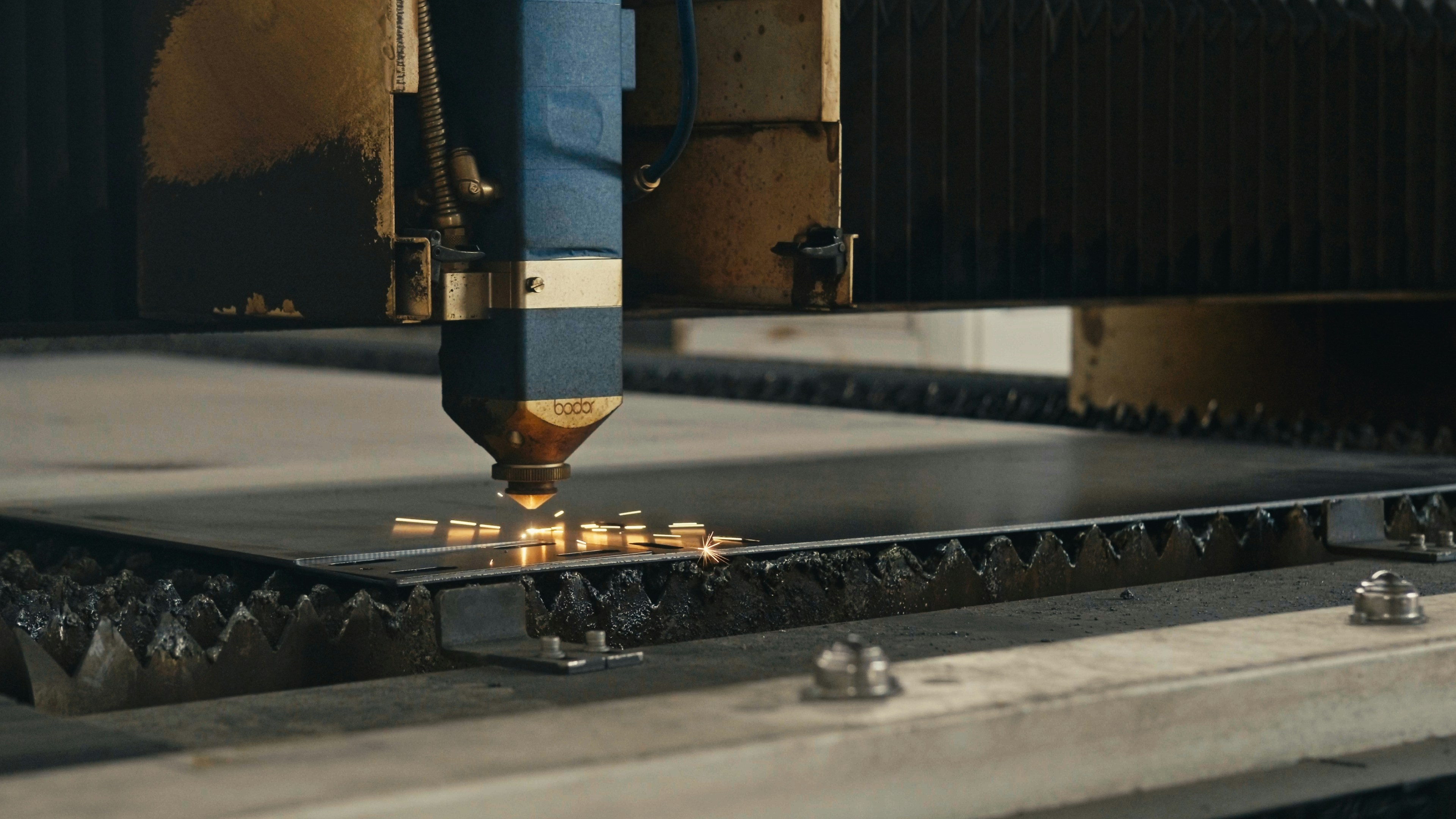
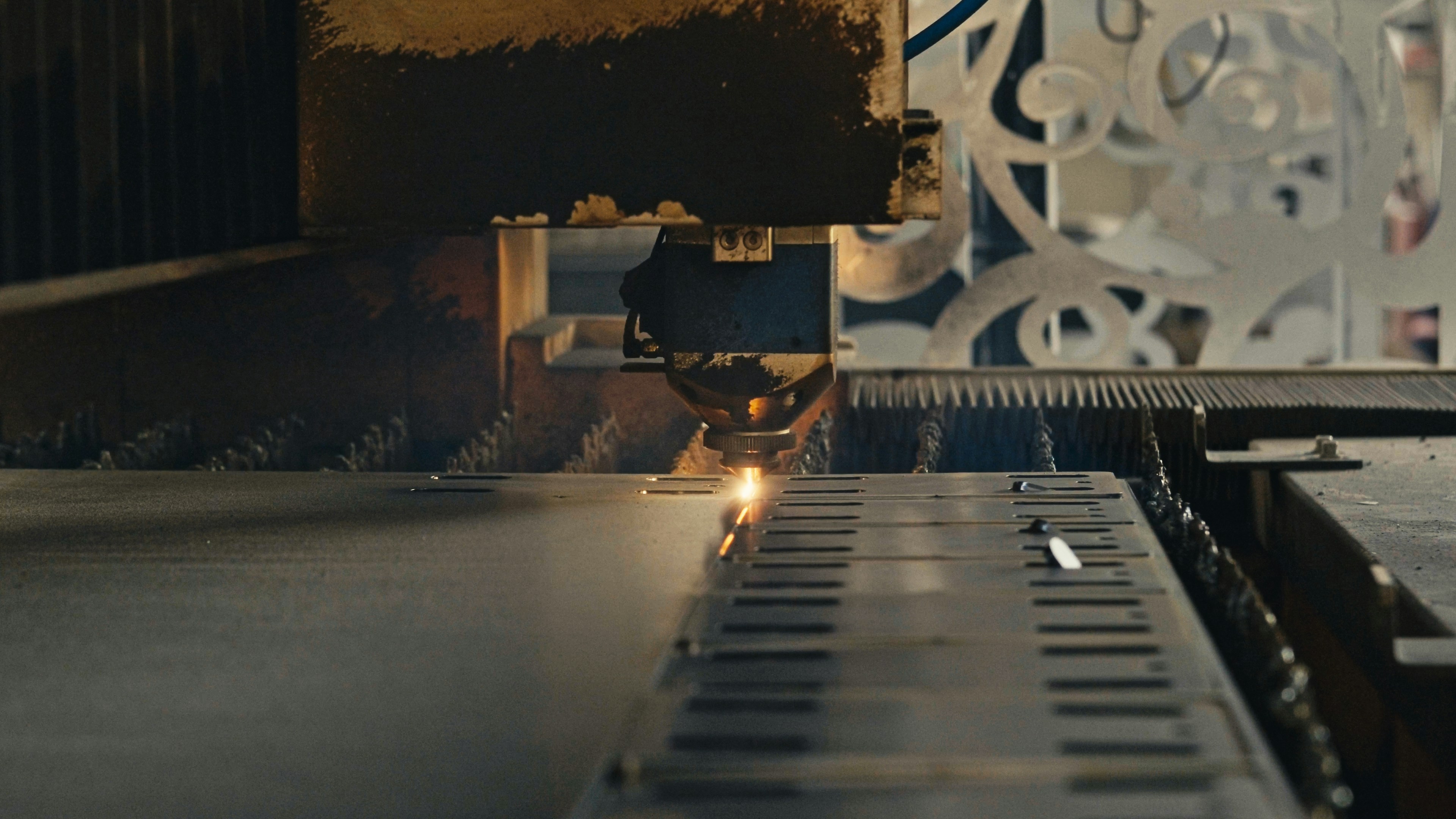
Fiber laser cutting has become a dominant technology in modern metal processing, renowned for its speed, precision, and efficiency. The process works by generating and transmitting a high-powered laser beam through optical fibers to a cutting head. This focused beam of light melts, burns, or vaporizes the material along a path programmed into a CNC system, while an assist gas blows the molten metal away, leaving a clean, precise edge.
Key advantages of fiber laser cutting include:
- Exceptional Precision and Speed: Fiber lasers offer superior beam quality, which allows for extremely fine and accurate cuts, making them ideal for intricate designs and parts with tight tolerances. They are significantly faster than CO2 lasers, especially on thin materials, with speeds up to three times greater.
- High Efficiency and Low Operating Costs: Fiber lasers are more energy-efficient than traditional CO2 lasers, reducing the overall carbon footprint. They also require less maintenance and have fewer consumable parts, leading to lower operating costs and reduced downtime.
- Minimal Heat-Affected Zone (HAZ): The highly focused beam localizes heat, which results in a very small heat-affected zone. This minimizes material distortion and stress, which is critical when working with heat-sensitive materials or parts requiring high dimensional stability.
- Versatility: While best suited for metals, fiber lasers can cut a wide range of materials, including stainless steel, carbon steel, aluminum, and copper, making them a versatile tool in any fabrication shop.
Waterjet Cutting for Sheet Metal Fabrication
Waterjet cutting is a unique, non-thermal process that uses a hyper-accelerated stream of water to cut materials. The process works by forcing water through a high-pressure pump and then expelling it through a tiny, jewel-tipped nozzle at supersonic speeds. For cutting hard materials like metal, a granular abrasive (such as garnet) is mixed into the water stream, creating a powerful erosive force that can slice through virtually any material without generating heat.
The primary benefits of waterjet cutting are:
- No Heat-Affected Zone (HAZ): As a cold cutting process, waterjet cutting does not introduce any thermal distortion, stress, or changes to the material's intrinsic properties. This makes it the ideal choice for materials that are sensitive to heat, such as certain alloys, composites, or plastics.
- Unmatched Material Versatility: Waterjet cutters are capable of slicing through an incredibly diverse range of materials, including metals, stone, glass, plastics, composites, rubber, and foam.
- Excellent Edge Quality: This method produces a smooth, sandblasted-like edge finish that often requires no secondary deburring or finishing, saving time and labor.
- Ability to Cut Thick Materials: Waterjet cutting excels at cutting very thick materials that would be challenging or impossible for laser or plasma cutters.
The choice between fiber laser and waterjet often comes down to the specific application's needs regarding material, thickness, speed, and whether a heat-affected zone is permissible.
Shaping Metal: CNC Bending and Forming in Sheet Metal Fabrication
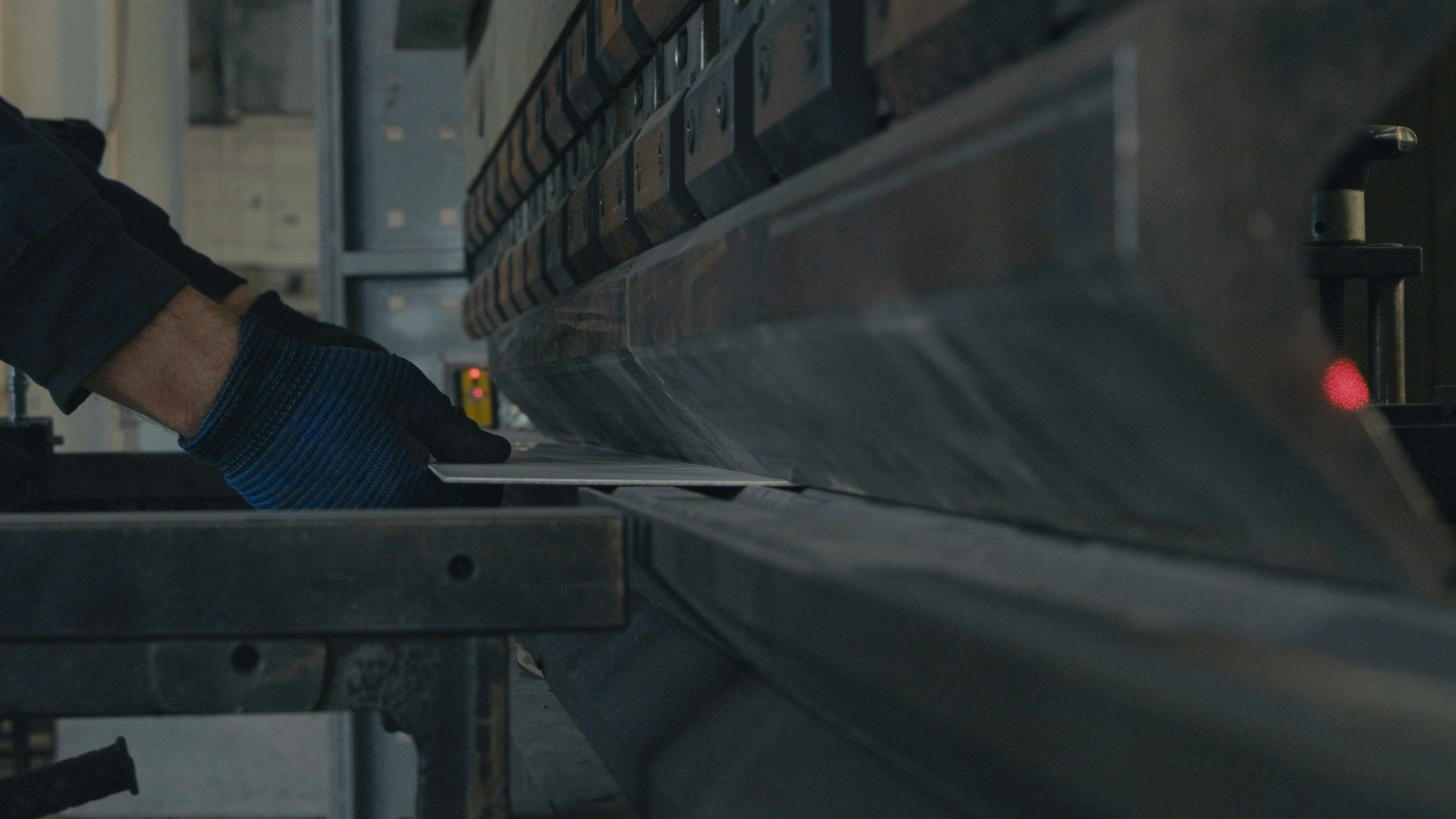
After a part is cut, it is often bent or formed to create its three-dimensional shape. This critical process is predominantly handled by CNC (Computer Numerical Control) press brakes, which have become the cornerstone of precision forming in modern fabrication.
CNC bending is a process where a sheet metal component is placed between a punch (upper tool) and a die (lower tool). The press brake's ram then applies controlled force, pressing the punch into the metal and forcing it to bend into the shape of the die. What makes this process so precise is the CNC controller. The machine's backgauge (which positions the part), the depth of the punch's stroke, and the entire bending sequence are automated based on a digital program, often generated directly from a 3D CAD model.
Key aspects of CNC bending include:
- High Precision and Repeatability: CNC press brakes can consistently produce bends with angular tolerances as tight as ±0.5 degrees, ensuring that every part in a production run is identical. This level of accuracy is essential for components that must fit perfectly into larger assemblies.
- Complex Geometries: Modern machines can execute complex sequences of bends to create intricate shapes that would be nearly impossible with manual methods.
- Efficiency: Automation significantly reduces setup times and eliminates the trial-and-error approach common in manual bending, leading to faster production cycles and lower labor costs.
Advanced features like real-time angle correction and automatic crowning (which compensates for machine deflection) further enhance the accuracy and consistency of the bending process.
Joining Components: Welding in Sheet Metal Fabrication
Welding is the process of joining two or more metal parts together by applying heat, pressure, or both, to create a permanent, unified structure. Given the thin nature of sheet metal, welding requires careful control of heat input to prevent warping, distortion, or burn-through. Several welding techniques are commonly used in sheet metal fabrication, each suited for different materials, thicknesses, and application requirements.
The most common methods include:
- MIG (Metal Inert Gas) Welding: Also known as Gas Metal Arc Welding (GMAW), MIG welding is popular for its speed and ease of operation. It uses a continuously fed wire electrode and a shielding gas to protect the weld pool from contamination. It is well-suited for production environments and can be used on mild steel, stainless steel, and aluminum.
- TIG (Tungsten Inert Gas) Welding: Also called Gas Tungsten Arc Welding (GTAW), TIG welding is favored for applications requiring high precision and a superior aesthetic finish. It uses a non-consumable tungsten electrode and offers excellent control over heat, making it ideal for very thin materials like aluminum and stainless steel where appearance is critical. Although slower than MIG, it produces cleaner welds with minimal spatter.
- Spot Welding: This is a type of resistance welding where two copper electrodes clamp sheet metal parts together and pass a strong electrical current through the spot. The resistance to the current generates heat, which melts and fuses the metal at that point. It's a fast and economical process widely used in the automotive industry for joining body panels.
The choice of welding method depends on factors like the material type, part thickness, required weld strength, cosmetic requirements, and production volume.
The Role of 3D CAD and Design Software in Sheet Metal Fabrication
The digital revolution has transformed sheet metal fabrication, with 3D CAD (Computer-Aided Design) software acting as the central nervous system of the entire process. Before a single piece of metal is cut, the part is designed and fully realized as a detailed 3D digital model. This has replaced the time-consuming and error-prone process of manual, 2D paper drafting.
The role of 3D CAD software in modern fabrication is multifaceted and indispensable:
- Enhanced Visualization and Accuracy: 3D models provide a realistic, 360-degree view of the final product, allowing designers to identify potential design flaws, interferences, or assembly issues before production begins. This dramatically improves accuracy and reduces costly errors downstream.
- Seamless Integration with CNC Machinery (CAD-to-CAM): 3D CAD models can be directly imported into CAM (Computer-Aided Manufacturing) software, which then generates the machine code to run CNC lasers, press brakes, and other automated equipment. This seamless digital workflow minimizes manual programming and interpretation errors.
- Simulation and Optimization: Advanced CAD software includes tools for simulating the manufacturing process. For example, bending simulation can predict how the material will deform, check for collisions with the machine or tooling, and automatically calculate the correct flat pattern. Stress analysis can test the structural integrity of a design under load.
- Efficient Material Usage: CAD software can optimize how parts are arranged on a raw sheet of metal (a process called nesting) to minimize scrap material. This not only saves money but also supports sustainable manufacturing practices.
- Improved Collaboration: Digital files can be easily shared among designers, engineers, clients, and fabricators, ensuring everyone is working from the same up-to-date model. This breaks down communication barriers and fosters a more efficient, collaborative workflow.
In essence, 3D CAD is the digital blueprint that guides every step of the fabrication process, ensuring precision, efficiency, and innovation from concept to finished product.
Key Advantages and Versatile Applications of Sheet Metal Fabrication
Sheet metal fabrication is more than just a set of processes; it's a strategic solution that offers a powerful combination of efficiency, quality, and versatility. Its unique advantages have made it an indispensable part of countless industries, driving innovation and enabling the production of everything from simple brackets to mission-critical aerospace components.
Unlocking Efficiency and Quality with One-Stop Sheet Metal Fabrication
In today's fast-paced manufacturing environment, juggling multiple suppliers for different stages of a project—one for cutting, another for bending, and a third for finishing—can create significant bottlenecks and inconsistencies. This fragmented approach often leads to increased costs, longer lead times, and communication breakdowns. This is where the "one-stop shop" or integrated fabrication model becomes a game-changer.
A one-stop sheet metal fabrication partner consolidates all processes under one roof, from initial design and prototyping to cutting, forming, welding, finishing, and assembly. This vertically integrated approach provides numerous strategic advantages:
- Streamlined Project Management: With a single point of contact, communication is simplified and more effective. Clients can easily track progress and make decisions without coordinating between multiple vendors, reducing the risk of misinterpretations and delays.
- Consistent Quality Control: When every step of the fabrication process is managed in-house, a consistent level of quality can be enforced from start to finish. This eliminates the risk of mismatched parts or varying quality standards between different suppliers.
- Reduced Lead Times: By removing the need to ship parts between different facilities, integrated fabrication significantly shortens the overall production timeline. This "just-in-time" capability is crucial for industries that depend on rapid turnarounds.
- Cost Savings: Consolidating services with a single partner eliminates markups from multiple vendors, reduces shipping costs, and minimizes material waste through optimized processes. This integrated approach leads to more accurate cost forecasting and a more efficient use of resources.
- Enhanced Collaboration and Optimization: Having designers, engineers, and production teams in the same facility fosters better collaboration. This proximity allows for early design-for-manufacturability (DFM) reviews, where potential issues related to tolerances, materials, or assembly can be identified and resolved before production even begins, locking in cost savings at the concept stage.
By creating a seamless ecosystem where hardware, software, and people collaborate effectively, one-stop fabrication unlocks maximum efficiency and ensures a higher standard of quality for the final product.
Speed, Precision, and Cost-Effectiveness in Sheet Metal Fabrication
The enduring popularity of sheet metal fabrication lies in its unique ability to balance three critical manufacturing pillars: speed, precision, and cost.
- Speed and Efficiency: Modern fabrication is built for speed. The development of CNC technology has dramatically reduced manufacturing times. Automated processes like fiber laser cutting and robotic press brakes enable high-speed production with consistent accuracy, making the process ideal for both rapid prototyping and large-scale manufacturing runs. Streamlined workflows, from optimized material handling to efficient workstation layouts, further cut down on delays and improve overall productivity.
- Precision: As discussed, advanced technologies ensure that sheet metal parts can be produced with impressively tight tolerances. This precision is not just about aesthetics; it's about functionality. In assemblies, parts must fit together perfectly to ensure structural integrity and proper performance. The ability of modern CAD-to-CAM systems to translate digital designs into precisely manufactured components with minimal error is a core advantage of the process.
- Cost-Effectiveness: Sheet metal fabrication is a highly scalable and cost-effective manufacturing method. For simple designs and high-volume runs, production costs are relatively low. Efficiency hacks like using nesting software to maximize material utilization and minimizing waste directly contribute to cost savings. Furthermore, designing for manufacturability—such as using standardized parts and consistent bend radii—can significantly reduce the number of machine setups and specialized tools required, further lowering production costs.
By leveraging these attributes, manufacturers can bring high-quality products to market faster and more affordably, a crucial competitive advantage in any industry.
Industries Driven by Sheet Metal Fabrication: From Automotive to Electronics
The versatility, strength-to-weight ratio, and cost-effectiveness of sheet metal make it a preferred material across a vast spectrum of industries. Its applications are nearly limitless, forming the structural backbone and protective skin of countless products we use daily.
Here are some of the key industries that rely heavily on sheet metal fabrication:
- Automotive and Electric Vehicles (EVs): The automotive sector is one of the largest consumers of fabricated metal, used for everything from vehicle frames and body panels to brackets and exhaust components. The rise of EVs has further intensified this demand, with sheet metal being crucial for manufacturing lightweight battery enclosures, thermal shields, power electronics covers, and structural reinforcements.
- Aerospace and Defense: In an industry where precision, lightweight strength, and reliability are non-negotiable, sheet metal fabrication is essential. It is used to create aircraft skins, structural supports, engine components, and various housings for electronics and communications equipment. These applications demand strict adherence to certifications like AS9100D and ITAR.
- Electronics and Technology: From server racks and data center cabinets to the chassis of consumer electronics, sheet metal provides the protective enclosures for sensitive electronic components. These housings must be precisely fabricated to support thermal management (e.g., heat sinks), cable routing, and EMI (electromagnetic interference) shielding.
- Construction and Architecture: Sheet metal is a staple in construction for both structural and aesthetic purposes. It is used for roofing, siding, gutters, HVAC ductwork, and structural steel framing. In architecture, materials like brushed aluminum or weathering steel are fabricated into decorative panels, facades, and staircases.
- Medical and Healthcare: The medical industry requires components with high precision, clean finishes, and corrosion resistance. Sheet metal is used to fabricate equipment housings for diagnostic machines, surgical tables, sterile storage units, and lab enclosures.
- Renewable Energy: As the world shifts towards sustainable energy, sheet metal fabrication plays a vital role. It is used to create components for solar panel mounting systems, wind turbine structures, and enclosures for energy storage systems.
This list is far from exhaustive, with other major sectors including industrial machinery, agriculture, marine, and consumer appliances all relying on the diverse capabilities of sheet metal fabrication.
Optimizing Outcomes and Future Trends in Sheet Metal Fabrication
To consistently produce high-quality parts efficiently, fabricators must master a complex interplay of materials, machinery, and design principles. Optimizing these elements not only ensures superior results but also paves the way for adopting the next wave of innovations. This section explores the key factors influencing quality, common pitfalls to avoid, and the exciting future trends shaping the industry.
Factors Influencing Quality and Accuracy in Sheet Metal Fabrication
Achieving precision in sheet metal fabrication is not a single action but the result of a structured process where multiple factors converge. The final quality of a component is influenced by decisions made at every stage, from initial design to final inspection.
Key factors include:
- Material Selection: The characteristics of the chosen metal—such as its strength, ductility, corrosion resistance, and thickness—directly impact its behavior during fabrication. For instance, high-strength steels require more force to bend and exhibit more "springback" (the tendency to return to their original shape), which must be accounted for. Selecting the appropriate material for the intended application is the first step toward ensuring durability and performance.
- Design for Manufacturability (DFM): The quality of a part begins on the drawing board. A design that is optimized for manufacturing can prevent many common fabrication issues. This involves specifying appropriate bend radii, ensuring holes are not too close to bends, and simplifying geometries where possible. Collaborating with a fabricator early in the design phase is crucial to vet a design's manufacturability.
- Tooling and Equipment: The precision of fabrication is heavily dependent on the quality and calibration of the tools and machinery used. This includes everything from the sharpness of cutting tools and the accuracy of press brake punches and dies to the calibration of measuring devices. Modern CNC machines with features like real-time angle correction and automated tool changing are essential for maintaining tight tolerances consistently.
- Process Control and Operator Skill: Even with advanced automation, skilled operators and technicians are vital. Their expertise is needed to properly set up machines, monitor production, and make real-time adjustments. Implementing strict process controls and fostering a culture of precision ensures that all operations, from cutting and bending to welding, are performed correctly every time.
- Environmental Factors: Temperature fluctuations in the workshop can cause metals to expand and contract, which can affect dimensional accuracy if not properly managed. Measuring and fabricating materials under consistent environmental conditions helps prevent these subtle but significant errors.
Common Misconceptions to Avoid in Sheet Metal Fabrication
Several myths and misunderstandings persist about sheet metal fabrication. Debunking them is key to making informed decisions and collaborating effectively with manufacturing partners.
Misconception 1: "It's all just manual labor." While craftsmanship remains important, modern sheet metal fabrication is a high-tech industry. It relies heavily on advanced automation, including CNC machinery, robotic systems, and sophisticated design software to achieve a level of precision and efficiency impossible through manual labor alone.
Misconception 2: "Any design can be fabricated." A design that looks perfect in a CAD model may be impractical or impossible to manufacture. This is where Design for Manufacturability (DFM) becomes critical. Issues like bend radii that are too tight for the material thickness can cause cracking, while features placed too close to a bend can become distorted. Fabricators must adhere to physical rules regarding how metal behaves under stress.
Misconception 3: "All sheet metal fabricators are the same." Fabrication shops can vary widely in their capabilities, specializations, and quality standards. Some may specialize in certain materials like aluminum or stainless steel, while others may focus on specific industries like aerospace or medical devices. Choosing a partner with the right expertise, equipment, and quality certifications for your specific project is crucial.
Misconception 4: "Tighter tolerances are always better." Specifying tolerances that are tighter than what the function of the part requires can dramatically increase manufacturing costs and lead times without adding any real value. It's a common DFM mistake to over-specify tolerances. The goal should be to define tolerances that are appropriate for the part’s application, balancing precision with cost-effectiveness.
Misconception 5: "Fabrication is inherently bad for the environment." While manufacturing processes do use energy and create waste, the modern sheet metal industry has made significant strides in sustainability. Many fabricators use recycled metals, leverage energy-efficient machinery, and employ nesting software to minimize scrap. The high recyclability of metals like aluminum and steel makes them key components of a circular economy.

The Future Landscape of Sheet Metal Fabrication: AI, Automation, and Sustainability
The sheet metal industry is in the midst of a profound transformation, driven by digital technology, the demand for greater efficiency, and a growing focus on environmental responsibility. The factory of the future is no longer a distant concept; it's actively being built today.
Key trends shaping the future include:
Automation and Robotics: Automation is moving beyond simple tasks to fully integrated systems. Robotic arms now load and unload machines, transfer parts between stations, and even perform complex welding operations with minimal human intervention. The rise of "cobots" (collaborative robots) is also enabling humans and machines to work safely side-by-side on complex tasks, enhancing productivity without replacing skilled labor.
Artificial Intelligence (AI) and Machine Learning: AI is poised to revolutionize fabrication by turning production data into actionable intelligence. Machine learning algorithms can analyze historical data to predict the optimal settings for a new job, adjusting for material variations and tool wear to maximize accuracy. AI-powered vision systems are already being used for quality control, detecting defects with a level of precision that surpasses human ability. In the future, these systems will create self-correcting processes, where inspection results automatically prompt machine adjustments in real-time.
Industry 4.0 and the Smart Factory: The integration of AI, automation, and the Industrial Internet of Things (IIoT) is creating the "smart factory." In this interconnected ecosystem, machines, software, and people work in harmony. Real-time data from sensors on the production line can be used for predictive maintenance, alerting technicians to potential machine failures before they happen and optimizing workflows for maximum efficiency.
Sustainability: Sustainable manufacturing is no longer a niche concern but a core business imperative. The industry is focused on:
- Minimizing Material Waste: Advanced nesting software is used to optimize part layouts on metal sheets, drastically reducing scrap.
- Energy Efficiency: Fabricators are investing in energy-efficient machinery and powering their operations with renewable energy sources like solar.
- Recycling and Circular Economy: Steel and aluminum are highly recyclable, and using recycled materials saves a massive amount of energy compared to producing them from raw ore. Many shops are implementing closed-loop recycling programs to build a more circular economy.
- Cleaner Production Methods: Innovations in filtration systems and the use of low-VOC (volatile organic compound) coatings are reducing the environmental impact of finishing processes.
These trends are not mutually exclusive; they are deeply interconnected. Together, they are forging a future for sheet metal fabrication that is more precise, efficient, intelligent, and sustainable than ever before.
Frequently Asked Questions (FAQ)
Q1: What is the main difference between sheet metal fabrication and CNC machining?
Sheet metal fabrication is a formative process that starts with flat metal sheets and shapes them through cutting, bending, and assembling. CNC machining is a subtractive process that starts with a solid block of material and carves away excess material to create a part. Fabrication is generally more cost-effective for enclosures and structural parts, while machining is ideal for complex, high-precision components.
Q2: Why is Design for Manufacturability (DFM) so important in sheet metal?
DFM is crucial because a design that ignores the physical properties of metal and the capabilities of fabrication equipment will lead to manufacturing failures, such as cracked bends, distorted parts, and high costs. By collaborating with a fabricator early, designers can optimize their parts to be produced efficiently and reliably, avoiding costly rework and delays.
Q3: What are the most common materials used in sheet metal fabrication?
The most common materials are various grades of steel (including carbon and stainless steel), aluminum, copper, and brass. The choice of material depends on the application's requirements for strength, weight, corrosion resistance, conductivity, and cost.
Q4: How are AI and automation changing sheet metal fabrication?
AI and automation are creating "smart factories" that are more efficient and precise. Robotic systems handle repetitive tasks like loading, bending, and welding, while AI algorithms analyze data to optimize production processes and predict maintenance needs. AI-powered vision systems also enhance quality control by detecting defects automatically.
Q5: Is sheet metal fabrication a sustainable process?
The industry is making significant strides in sustainability. Key practices include using highly recyclable materials like steel and aluminum, employing nesting software to minimize waste, investing in energy-efficient machinery, and using cleaner production methods. These efforts help reduce the environmental footprint and often lead to cost savings.
Conclusion
Sheet metal fabrication remains a dynamic and essential part of manufacturing, continuously adapting with new technologies and processes. From its foundational techniques of cutting, bending, and welding to the cutting-edge innovations of AI-driven automation and sustainable practices, this industry consistently pushes the boundaries of what's possible.
By understanding its core techniques, key advantages like precision and cost-effectiveness, and its broad applications across nearly every major industry, we can better appreciate its vital role in creating the countless components that shape our modern world. It is a testament to human ingenuity and the relentless pursuit of improvement.
We are excited to witness how innovations like artificial intelligence, advanced design software, and a commitment to sustainability will further enhance the precision, efficiency, and environmental responsibility of sheet metal fabrication in the years to come. These advancements are not just improving a manufacturing process; they are building a more advanced and sustainable future, one precisely fabricated part at a time.